Showing posts with label Alternative History. Show all posts

Thursday, October 1, 2026

#Review - Winterveil by Ava Reid #YA #Dystopian #SYFY

Series:
 Winterveil
Format: 
448 pages, Hardcover
Release Date: September 15, 2026
Publisher: HarperCollins
Source: Publisher
Genre: YA, Alt History, Dystopian

The Secret History meets Ready Player One in #1 bestselling author Ava Reid’s brand-new, thrilling alternate-future duology, where four teens are recruited into a century-long virtual Cold War until they discover the truth and decide to fight back.

The top students at Valeran Academy should be in jail. Instead, they were offered a way out: enroll and pledge themselves to the nation. In their alternate future where the Cold War still rages, America needs patriots—don’t call them spies.

In the halls of America’s most covert military academy, all that matters is who is number one. Four students rise to the top: Julian, the politician; Klaudia, the strategist; Nadiya, the soldier; and Giselle, the beauty queen with a secret that could change everything.

As they compete for the top ranking that would free them from their gilded cage, the four feel strangely drawn together. Underneath every rivalry lurks a desperate yearning, bringing the strongest of them down to their knees.

Too soon, they’re ripped from the safe walls of their school and recruited for a mysterious training mission that their elusive headmaster tells them is only a simulation. But the four teens quickly realize that they are merely pawns, designed to play off of each other in a dangerous game. Even their blossoming feelings will be used against them in this game of war.

To win, they will have to question everything: each other, themselves, even their very understanding of reality.

It was only supposed to be a game. But now lives and hearts are on the line. Are you brave enough to play?


Ava Reid's Winterveil is the first part of a two-part duology. The premise begins with: In a world where Gorbachev was assassinated and the Cold War dragged on, the eerie tension of the Cold War combines with futuristic concerns like AI, the metaverse, and the surveillance state. Part ripped-from-the-headlines and part history, the publisher frames it as The Secret History meets Ready Player One, or The Secret History meets The Ballad of Songbirds and Snakes. 

The point of divergence is the 1984 assassination of Mikhail Gorbachev on the steps of Downing Street. The thaw never arrives. By 2037, the Soviet Union still exists, proxy wars continue across continents, defense contractors (notably Auric) and neural technology lock the stalemate in place, and a “third Red Scare” atmosphere colors American institutions. Valeran Academy, hidden in Virginia’s Blue Ridge Mountains and founded in 1963 under Kennedy as a joint CIA/DOD project, has no application process. 

It recruits precocious teenage offenders and commutes their sentences in exchange for training as strategists, cryptographers, hackers, and weapons specialists—the future pipeline for intelligence work. Official language insists “We are not training spies—we are training patriots.” Students compete on a public ranking board; top placement is the path out of the gilded cage. Curriculum blends classical strategy (including the Melian Dialogue: “The strong do what they will, and the weak endure what they must”) with neural interfaces and war simulations.
The four leads
  • Julian Joyce-Young III: Elected mayor of Boston at eighteen (on a dare, in some accounts), then impeached and arrested for bribery and embezzlement. Disowned by a powerful political-business dynasty. Charming orator placed on the Strategy and Statecraft track; his chapters carry much of the political and familial pressure.
  • Klaudia Shimonova: Leningrad-born, Upper West Side–raised, arrested at fifteen after forging her father’s trading credentials and turning them into roughly $10 million. Holds the academy’s rank-one spot for years. Treats social interaction as a game-theory problem; Reid’s strongest character to date—a girl who made herself cold because the alternative was her father’s hands.
  • Giselle Buckley: Small-town West Virginia pageant queen with a scientifically verified eidetic memory capable of projecting vivid visual memories into other minds. Arrested for credit-card theft. Her ability becomes central to the technology plot.
  • Nadiya Karam: Weapons and tactical prodigy, orphaned and raised inside the academy as the personal ward of headmaster Dr. Cornelius Iver. Third-generation Lebanese American; carries a dangerous family secret tied to the neural systems the school uses. Forms the book’s primary sapphic romance with Giselle.
Archival inserts—press clippings, redacted files, scrapped CIA language insisting “we are not training spies—we are training patriots”—do more world-building than exposition dumps. The school's competitive engine, which Reid links to her time in competitive Pokémon’s VGC format, produces the book’s best set piece: Thymos.exe, a student-built neural strategy game whose tournament final collides rankings, romance, and plot on one stage. 

When the four are pulled into Traumstadt, a simulated East German town whose mission parameters keep being rewritten, the novel finally becomes the spy thriller it promised. Klaudia is the reason to read it. She is the sharpest character Reid has written: a girl who made herself cold because warmth was unsafe, and who remains legible even when she is calculating. The ensemble works best when the four are forced to choose cooperation over defection inside a game the state designed. 

That prisoner’s-dilemma frame is the book’s real subject: institutions that recruit already-failed adolescents, call the exploitation a second chance, and then use their minds as infrastructure. The weaknesses are real. The first act spends too long on cafeteria politics and the ranking board before the plot arrives. Several adult antagonists—a tech billionaire, a handler who speaks in riddles—are broad enough to hate and too thin to fear. 

Historical texture is suggestive rather than rigorous; the point of divergence is clear, but the half-century of altered Cold War that follows is sketched more than built. And the ending does not end. Leads are scattered, a major system (Project Dreamscape, a shared reality powered by neural impulses and anchored by an eidetic mind) is revealed and then left mid-crisis, and the book cuts out in a way that will satisfy readers who want a duology hook and frustrate anyone who wanted a complete novel. Content is upper YA in the mature sense: consensual and non-consensual sexual situations (not graphically explicit, but not coy about lead-up or aftermath), an attempted assault, parental abuse, a recounted sibling suicide, gun violence, and training that crosses into torture.


Friday, March 21, 2025

#Review - The Martian Contingency by Mary Robinette Kowal #SyFy

Series:
 
Lady Astronaut (#4)
Format: Paperback, 400 pages
Release Date: March 18, 2025
Publisher: Tor Books
Source: Publisher
Genre: Science Fiction / Alternative History

Mary Robinette Kowal returns to Mars in this latest entry to the Hugo and Nebula Award-winning Lady Astronaut series.

“Kowal masters both science and historical accuracy in this alternate history adventure.”—Andy Weir, author of The Martian, on The Calculating Stars

Years after a meteorite strike obliterated Washington, D.C.—triggering an extinction-level global warming event—Earth’s survivors have started an international effort to establish homes on space stations and the Moon.

The next step – Mars.

Elma York, the Lady Astronaut, lands on the Red Planet, optimistic about preparing for the first true wave of inhabitants. The mission objective is more than just building the infrastructure of a habitat – they are trying to preserve the many cultures and nuances of life on Earth without importing the hate.

But from the moment she arrives, something is off.

Disturbing signs hint at a hidden disaster during the First Mars Expedition that never made it into the official transcript. As Elma and her crew try to investigate, they face a wall of silence and obfuscation. Their attempts to build a thriving Martian community grind to a halt.

What you don’t know CAN harm you. And if the truth doesn’t come to light, the ripple effects could leave humanity stranded on a dying Earth…


"I shall either find a way or make one"

The Martian Contingency is the Fourth installment in author Mary Robinette Kowal's Lady Astronaut Series. Set in an alternate history where a meteorite strike in 1952 devastates Earth and accelerates humanity’s push to the stars, this novel finds Elma York aka the Lady Astronaut and her team on Mars, tasked with laying the groundwork for a permanent human presence. Elma has been instrumental in getting women in the space program, while also helping getting people to the Moon, and now Mars where the story takes place where she will have more of a command responsibility. 

Elma's optimistic about building a habitat that preserves Earth’s diverse cultures without its prejudices—a noble goal in a timeline where humanity’s survival hinges on escaping a dying planet. One of the main challenges has been a terrorist group known as Earth First which has caused serious damage to the plans of saving as many people on Earth before it's too late. But from the outset, something feels off. Kowal introduces a mystery rooted in the First Mars Expedition, hinting at a disaster buried in silence. 

As Elma digs deeper into what happened during First Mars Expedition that seems to be buried in secrets and silence, she and her husband Nathaniel face a litany of challenges and cascading technical failures that threaten the mission. The stakes are clear: uncovering the truth could mean the difference between a thriving Martian colony and humanity’s extinction. The science, as always, is a highlight. Kowal’s explanations are accessible yet rigorous, grounding the narrative in a way that invites readers to geek out over Martian engineering while still feeling the weight of human stakes. 

Still, those less versed in STEM might find themselves skimming, though the emotional core keeps the story relatable. Those who don't like to be preached at via religion or about abortion will likely find this book highly uncomfortable since the author spends way too much time on both. Compared to the series’ earlier entries, this book pushing Elma into new territory—literally and figuratively—while wrestling with the consequences of past missions. It’s not a standalone; familiarity with The Fated Sky and The Relentless Moon enriches the experience, as callbacks to prior events and characters deepen the stakes.


ONE

A NEW ELLINGTON SCORE MARKING THE RETURN TO MARS

Special to The National Times

KANSAS CITY, February 5, 1970—Duke Ellington has been commissioned to compose and perform an original score to celebrate man’s return to Mars. The Ellington composition takes about ten minutes to perform: It includes vocal music entitled “Mars Maid,” to be sung by Ella Fitzgerald.

President Wargin and Ellington watched together as the Marswalkers left their spacecraft this morning. “This is a tremendous day,” the president said, “as we take our next step to establishing a permanent presence on Mars to create a new safe haven for humanity.”

The performance will be staged in the New White House in Kansas City in mid-August when the second dome at Bradbury Base will be opened and the colonists now in orbit descend to their new home on Mars. The performance will be transmitted to the Red Planet for the enjoyment of the one hundred men and women living there.

Fem 50, Mars Year 5, Frisol, 1900 hours—Landing + 0 sols

Do you remember where you were when the stars came out? I was with my husband, on Mars.

So many pivotal moments in my life had involved stargazing before the Meteor. I hadn’t seen a clear night sky from the surface of a planet since it struck Washington, D.C., on March 3, 1952. Twenty-six million dead. Numbers have shape and texture in my head, and this one was dense and pitted and worn smooth from seventeen years of grief.

Seventeen years since the Meteor and here we were on Mars.

Above the undulating horizon of Gale Crater, the Martian night twinkled. The stars did not blaze in crystalline perfection the way they did in space. They sparkled through the atmosphere. Blue and red, silver and gold, danced against a deep purple.

The stars that had been our navigational aids on the voyage here drew my eye like old friends.

I wanted to linger on the surface of Mars and stargaze with Nathaniel, not knowing when I’d be suited up and outside at night again. But it was a selfish waste of consumables.

I needed to head into Bradbury Base, where the rest of the team was, but as soon as I did … as soon as I finished that last item on my checklist, I would stop being a pilot and switch to my other role as second-in-command on the mission.

Nathaniel leaned his helmet against mine. “What’s going on?”

“Hm?” I blinked and turned my head to smile brightly at him. We were on Mars! After years of working to get off Earth, we were here as part of the Second Mars Expedition. We were the next step in creating a new permanent home for humanity. I should be happy. I was happy. “Just enjoying the stars.”

“Uh-huh … For the record, how long have we been married?” He raised an eyebrow.

“Twenty years.”

“Twenty years! And none of this gear hides your fretting face.”

“Fretting face?” I rolled my eyes, but I could feel the line between my brows relax. “Fine. I’m fretting because I’m about to have to go inside and be in charge. Why did I let Nicole talk me into this?”

“Well, I mean, she is the president of the United States.” He gave a rueful chuckle. “And very persuasive.”

The bean counters back on Earth had wanted me—no, they’d wanted the famous Lady Astronaut of Mars in a visible command position to lend credibility to the mission. That should have come from the actual mission commander, but Leonard Flannery was Black. He was also eminently more qualified to be mission commander than I was. He’d landed on the planet on the first mission. I hadn’t. But I was very good at being a pretty face for publicity.

Thank God we were past the days where we had to avoid mentioning that I was Jewish. Mostly past.

“All right. Let me finish this checklist and we’ll go in.”

I walked around our landing craft, the Esther, one last time to check the tie-down straps. The landing pad was the same familiar shape as the one on the Moon, but a soft salmon instead of lunar gray. Everything felt different from training. I’d experienced spacesuits and Moon suits, both were stiffer than a Mars suit. Training on Earth, it was heavier. Training on the centrifugal ring of the Goddard, we always fought the Coriolis effect. Training on the Moon, you couldn’t hear the whisper of wind outside your helmet.

Wind. Just wind. Not the sound of a spacesuit failing.

The hours after landing had been a focused series of checklists and supervising the off-loading while other members of the team got the habitat up and running. Then I’d turned to making sure that the Esther was locked down since it would be a month, at best, before I launched again. And Martian months were fifty-five sols long, so beyond the checklists, I wanted to make sure my ship was tucked in snug and secure.

And she was. There was nothing left to do. The last box was checked on my list.

“Elma, come look.” Nathaniel stood between the Esther and the arched doorway into the base. “The Goddard is transiting.”

I didn’t run, because that’s a good way to fall and damage your suit. But I looked up as I walked to him. Across the dancing backdrop of the evening sky, the clear bright light of the Goddard, the ship that had brought us here, traced an arc across the heavens.

“Oh—” My breath caught at the sight of an evening star. We weren’t displaced enough in the galactic disc to make a difference, so we had the same stars and the same constellations. Except for one significant difference. “It’s Earth.”

Small and the palest blue, if you thought about the color blue while looking at it, our home planet sat low on the horizon to the west where the sun had set.

Nathaniel was silent as we leaned against each other in an embrace. I could feel his weight against me, but the details of his body were lost to the pressurized surfaces of our suits. He shifted. “Where?”

“See Orion? Follow the belt and then … it’s the one that’s bright like Venus.”

His helmet rested against mine and I could hear the telltale snuffle of an astronaut whose nose is running. You can’t wipe them in a spacesuit. It was good to know that the sheer joy of having made it here—to Mars—was making him cry, too.

When the Goddard passed below the horizon, I sighed and turned to look at Nathaniel. The one exterior light at Bradbury Base cast his face into yellow and gray relief.

My piloting work was truly done for tonight and I could feel the fatigue starting to catch up.

I squeezed Nathaniel’s hands. “How are things inside?”

“Starting to wind down for the night.” He nodded toward the dome, which cast a warm glow up through the bit of translucent curve that peeked above the regolith. “A couple of annoyances but nothing we didn’t plan for.”

“I can’t believe you suited up again to come back out for me.” And not just because putting on a Mars suit was tedious, but because he had voluntarily walked away from ongoing work.

“I wanted to be here when you looked up.”

Holding his hand, I took one last look at the night sky before walking back to the base. I could stare at the stars forever.


Tuesday, August 29, 2023

#Review - All The Dead Shall Weep by Charlaine Harris #Fantasy #Western #Alternative

Series: Gunnie Rose # 5
Format: Hardcover, 256 pages
Release Date: September 5, 2023
Publisher: Gallery / Saga Press
Source: Publisher
Genre: Fantasy / Dark Fantasy

#1 New York Times and USA TODAY bestselling author returns with the fifth installment in the bestselling Gunnie Rose series as sisters Lizbeth Rose and Felicia as well as brother Eli and Peter, are reunited in Texoma only to break apart before the Wizard’s Ball held in San Diego, which will determine all their fates.

Following the murderous events of the “gripping…thrill-ride” (Karin Slaughter) Serpent of Heaven, Lizbeth Rose is awaiting the arrival of her sister Felicia and her husband’s younger brother Eli in Texoma. Both needed to leave the seat of the Holy Russian Empire in San Diego after Felicia’s burgeoning wizardly power in death magic became the reason for kidnapping and assassination attempts from her mother’s family of high-powered wizards in Mexico.

Yet bad news has traveled ahead of them, as Eli is called back to San Diego, taking Peter along with him, splitting them apart in more ways than one as their enemies’ plans for revenge come to fruition. In this fifth installment in the beloved and bestselling Gunnie Rose series, #1 New York Times and USA TODAY bestselling author Charlaine Harris has crafted a family drama of murderous and magical thrills. 


All The Dead Shall Weep, by author Charlaine Harris, is the Fifth installment in the authors Gunnie Rose series. Lizbeth Rose Savarova is awaiting the arrival of her 1/2 sister Felicia Dominguez Karkarova and her husband Eli Savarova’s younger brother Peter in Segundo Mexia in Texoma which used to include Texas and Oklahoma. Both needed to leave the seat of the Holy Russian Empire in San Diego after Felicia’s burgeoning wizardly power in death magic became the reason for kidnapping and assassination attempts from her mother’s family of high-powered wizards in Mexico.

Yet bad news has just begun. Eli, who I called a coward numerous times, is called back to San Diego, taking Peter along with him, thus splitting them apart in more ways than one as their enemies’ plans for revenge come to fruition. It so happens that neither Eli nor Peter return again until the story is nearly finished. From the onset of this story, things are pretty intense. First, Lizbeth is mourning a personal loss and with Eli running away like a coward, it is Lizbeth and her sister Felicia who have to deal with a slew of dangerous situations. Second, it appears as though someone is financing a large army to take Texoma from the residents. 

This army appears to have been well trained, and well financed, and one of Lizbeth's adversaries may be encouraging the invasion of Texoma. Then it appears that powerful grigori families have set their sights on Felicia because of her death magic. Anyone who can do what Felicia does in this story, and in the past, means that one family could have their very own weapon to use against other grigori families around the world. This means that Lizbeth's nemesis Isabella Dominguez, who is Felicia's blood relative from a powerful witch family, shows up to create more chaos. 

The only way to get to Felicia, is to get rid of Lizbeth. If Lizbeth is not around, there's nothing to keep Felicia safe. But, even after knowing that Lizbeth killed their father, Felicia is not going to allow her sister to be removed just so that someone can use her powers for their machinations. With the Wizard's Ball coming up in a few months where everyone's fates will be decided, the sisters must stand against enemies who can move through space and time, and enemies who are hidden behind secrets not yet revealed.

*Thoughts* First of all, you must read this series in the order the books are released. There are some scenes which are replayed as Lizbeth tries to bond with a sister she met while in Mexico. Second, this book has lots, and lots of questions that need to be resolved, and yes, I do believe that the author needs to write at least one more book to reveal the answers to those questions. There is a bit of a shock at the end of the book, that I did not see coming, nor do I feel it was necessary since it basically isolates Felicia. In the end, I still do not like Eli for what he did to Felicia. While I understand loss, you don't just run away and leave the sisters to face enemies that literally come out of nowhere to cause trouble. 

Gallery Books, Gallery / Saga Press provided a complimentary digital ARC of this novel via NetGalley. All opinions expressed in this review are my own.


CHAPTER ONE Lizbeth
Eli was working, so I met the train at Sweetwater by myself. I’d just returned from guarding a shipment of farm implements on a leg of its journey between Canada and Mexico; I’d had to travel to take the job, but it had been ten days of work, and lucrative. And it had gotten me out of the house.

All of which meant I could afford to rent the old car from the Segundo Mexia stables and drive to Sweetwater to meet the train.

The station at Sweetwater was little more than a shack clinging to a platform, but at least there were a couple of benches under a roof. I was grateful for the shade. It was June, and June in Texoma is hot and dry… unless it rains. Then it’s hot and steamy. Today was a dry day.

The stationmaster, a sprightly sixty-ish woman named Molly Lerma, came out of the shack to sit with me. I expect she was glad of the company.

“You’re Jackson and Candle’s daughter, ain’t you?” she asked, and spat into an old can positioned at her feet.

“Candle’s daughter and Jackson’s stepdaughter. Lizbeth Rose. Lizbeth Rose Savarova, now.” My outlandish married name still got a lot of stares in Texoma, which used to be Texas and Oklahoma, more or less.

Molly Lerma gave me the expected long stare. “You the one married that wizard?”

I wasn’t going to tell her that Eli was a grigori, not a wizard, especially since I wasn’t sure there was a big difference. “Eli Savarov,” I said. I didn’t tack the “Prince” on first because it just sounded silly.

“And he wanted to live in Texoma?”

I wasn’t surprised Molly sounded incredulous. Texoma was poor, remote, and the smallest of the five countries created when the United States had fallen apart.

“He did,” I said, and left it at that.

“How’s Jackson doing? I knew him from school,” the stationmaster said. She spat again.

“He’s doing well.” Jackson had worked hard and carved himself out a position of power in Segundo Mexia, our little town.

Molly smiled. She was missing some important teeth. “Jackson always was a go-getter.”

I nodded and smiled back, hoping the conversation was at an end. Not that I minded talking about my stepfather. I was real fond of Jackson Skidder. He’d taught me how to shoot and given me my Colts. Couldn’t ask for anything better than my Colt 1911s. I had to stop myself from reaching down to pat them. Jackson had been way more of a dad to me than my actual father, whom I’d only met once, the day I killed him.

After a pleasant few minutes of silence, I asked Molly if the train was on time. She said, “I reckon.” That was the end of our conversation. Which suited me. I had a lot to think about.

I was waiting at the train station to pick up my half sister Felicia, who was coming in from San Diego (capital of the Holy Russian Empire) with Eli’s brother Peter. Not only had Eli and I not had company since we’d been married, but Felicia was over fifteen, and Peter was eighteen and a bit. The last time I’d seen them, they’d been sweet on each other. Their sleeping arrangements were kind of up in the air.

Also, though my half sister (same father, different mother) had started life in a Mexican slum, she was an educated city girl now. Segundo Mexia, my hometown, was humble and small, as Eli had carefully not said during the past few months. After we’d come home married and built the addition to my cabin and Eli had begun scouting around for work, I’d seen lots of mouth-tightening and tense shoulders. He was having a hard time adjusting.

During their stay, would Peter and Felicia be content to hunt with me or practice magic with Eli? Did you have to entertain company?

I knew that moving dirt, finding water, and warding businesses was not what Eli, now Prince Savarov, had planned to do as a grigori. In his life in San Diego, Eli had been in Tsar Alexei’s service. He’d had access to the palace and a relationship with the royal family. He’d had good friends among the other grigoris, the top of the magic hierarchy. He’d had a disagreeable but powerful partner named Paulina. He’d been able to visit his mother and sisters and Peter. He’d lived in the grigori dormitory. He’d been independent and important and on the way up.

Now Eli lived in Segundo Mexia with me, doing work that was anything but exalted. The people in my little town were just getting over regarding Eli with suspicion. Grigoris were not highly regarded in Texoma, unlike in the Holy Russian Empire. Of course, Eli lived with me, his wife, and I had only a trace of magic. I was a gunnie. I made my living—our living—with my shooting. In Texoma, that had more prestige.

Eli hadn’t complained about any of this. It was the silence that worried me.

If I ran out of concerns about my husband, I could fret about how my mother would feel when she met Felicia, the other daughter of my father. I’d been conceived when Oleg Karkarov raped my mother. Later, back in Mexico, Oleg had married Felicia’s mother before Felicia had come along. My mother had been beautiful; Felicia’s mother had been the scion of Mexico’s most prominent witch family.

I could see a black dot way down the tracks. I breathed out, relieved and worried and happy.

“Thar she comes,” Molly Lerma said. “Right on time.” She sounded triumphant, as if I’d told her I doubted the train would arrive.

“Right on time,” I agreed.

Hooting and screeching, the train came to a stop at the little station. Old Mrs. Guthrie got off first. Molly Lerma helped her down the steps. Mrs. Guthrie carried an ancient carpetbag and a cage with a bird in it. You would have thought she was carrying a horse, the fuss she made.

I was on my feet and waiting impatiently for her to clear the way, because I knew my sister would be next off. Felicia propelled herself from the steps, and I caught her, and we laughed and held each other, and she cried a little before she drew back. Felicia was so grown-up! So pretty! We didn’t look alike… but we did, in some ways.

By that time, Peter had gotten off, too. He was carrying two modest suitcases. He gave me a quick hug and a peck on the cheek before looking up and down the little platform. “Where’s Eli?” he said.

“Oh, my God!” Felicia was bouncing up and down on the balls of her feet. There was more of her to bounce than there had been a few months ago, especially in the chest department. “We’re here! We’re out of the city!”

That made me feel a little better. “I’m really glad to see you,” I said. “Peter, Eli’s working, but he’ll be home soon. Maybe by the time we get there.”

Peter smiled. That turned him into a man you’d look at a second time.

My half sister sure looked… and smiled back.

“This all your luggage?” I pointed at the two bags Peter carried.

“Peter said I had to travel light.” Felicia was still bouncing.

I asked Peter to put the bags in the car, and after some exclaiming over the luxury of getting to ride—which was a real luxury in Texoma, they both realized—Peter tossed the bags into the trunk, and we admired the car, which had been created out of bits and pieces of vehicles that had gone before. The body had come from a Ford, but the doors had been grafted on from another car line, and so on.

“Let’s get going,” I said. I opened the driver’s door. Peter went around to the other side.

“Who is your doctor?” Peter asked as he slid into the front seat.

“What doctor?” I sounded angry, and I knew it. I couldn’t help it. I was going to have to talk about what had happened.

They both froze. They glanced at each other. Then back at me.

Felicia said, very slowly, very cautiously, “Lizbeth, it seems to Peter and me that you are pregnant.”

“I’m not,” I said, and then I fainted.

It only took me a minute to come around, and then I scrambled to my feet, weaving as I stood, just for a moment. Felicia was kneeling beside the open car door, Peter looked horrified, and stationmaster Molly was gaping.

“Liar,” Felicia said, standing to put her arm around me. In a vague sort of way, I noticed she didn’t have to reach up to do that now. She was six years younger than me, but she was going to pass me height-wise, probably in the next few months.

That was not what I was supposed to be thinking about.

“I’m really not,” I said.

“But you fainted.”

“I lost the baby fifteen days ago,” I said, in a voice that told them to close the subject. I got back in the driver’s seat.

“Do you think I ought to drive?” Peter offered. “I’d be glad to do that.”

“I feel fine now.” And I did. Almost normal. I looked in the rearview mirror at my sister, who was trying not to cry.

After a moment’s hesitation, Peter climbed in beside me. The car started up just fine. The soft upholstery smelled like dust, probably because the windows had to be left open for air circulation. We drove out of Sweetwater with my two visitors looking around them at the gently rolling countryside, the patches of green (mostly mountain cedar), the dry grass, the beating sun.

“How’s Eli?” Peter said. “Where is he working?” He yawned widely.

“He had to go over to Cactus Flats early this morning. He’s doing some earthmoving to help with their new town sewage system.”

“An air grigori working on earth?” Peter frowned.

“It’s a job that pays,” I said, as mildly as I could. Though Eli’s specialty was air, that didn’t mean he couldn’t move some earth. Just required a little more work. Same way I’d taken on a job guarding a bank in Homer’s Corner while there was a large payroll in its safe, which was not my favorite job. It was what I called a sitting duck situation.

But Eli and I needed extra money to pay for the expense of additions to our cabin. Until the year before, my home had been one large room with a walled-off bathroom in one corner. In time, I’d gotten on city water.

Even later, after I’d met Eli and he’d come to care about me (and I’d done him some favors), he’d added electricity. Several of the houses on the hill had tied into it, too. So my monthly bills, which had been almost nonexistent, were now a factor in my budget. But I hunted for my meat, I’d gotten some vegetables in return for helping with my mother’s garden, and I swapped for other things I needed.

That had been good living for a single woman but not ideal for a couple, we’d found. It had been easy enough to add our bedroom, but it had put a hole in our savings. Now we’d added yet another bedroom to the cabin. We were managing, but we had to consider every expenditure. Eli wasn’t used to that.

I realized neither Peter nor Felicia had spoken in a few minutes. Felicia’s eyes were shut, and she’d leaned against the door. Peter’s eyes were open but droopy.

“You tired?” I asked him.

He nodded. In another minute, his eyes closed. I remembered how exhausted I’d been when I’d traveled to San Diego and back.

Felicia stirred a little when we got to the outskirts of Segundo Mexia. “We there?” she said, her voice full of sleep.

“Yep. You and Peter share a bed?” I asked Felicia quietly. I wanted to get that settled before we got home. “We can put a partition between two beds in the new room, or we can shove the beds together. We didn’t want to take anything for granted.”

Felicia was nodding off again. “We can share,” she muttered. “Either way is fine. When will we meet your mother?”

“Tomorrow,” I said. “When you’ve woken up.”

“?’Kay,” she said, and her eyes shut.

The rest of the ride was completely silent. It was brief, too, because there wasn’t much to Segundo Mexia even when you drove through the whole town, as I had. I hated to wake my passengers, but we’d have to walk up to the cabin. There was no track for a car. None of us who lived up the hill had one. Not enough money.

I roused my passengers to start them walking. I followed with the bags. We passed Rex Santino on his way to town and exchanged greetings. Jed Franklin was working on some leather at a table outside his cabin, and we nodded at each other. Chrissie popped out of her front (and only) door long enough to wave at me, shake her head at the sight of my guests (who were just about walking in their sleep), and begin to hang out her wash. Her two boys were at school, though it was about to close for the summer.

My mother, the town schoolteacher, had told me Chrissie’s boys were not too bright, very lively, and good-natured. Took after their ma, in other words. Chrissie’s youngest, a girl, began to cry from inside the shack. Chrissie pegged one last shirt on the line and went in.

Our cabin was the last one on the town side of the hill, near the top. I was glad to see the front door open as we approached. Eli leaped out to hug Peter, then Felicia.

“They need to go right to bed,” I called.

“I can see that.” Eli was smiling. He was very happy to see his brother. He’d talked about his sisters and his mother from time to time, but I think he’d missed Peter most of all. Eli raised his eyebrows over Peter’s head, silently asking if I’d gotten the word on the bed situation. I held up a finger for one. He nodded and made big eyes at me to show his astonishment.

I laughed out loud. I couldn’t help it. I was so glad to see Eli acting like himself.

Felicia turned to look, her eyes heavy with sleep. “Bathroom?” she said groggily.

“Indoors to the back right,” I said. It made me proud to need to give directions to the inside of the cabin. Before, it had been completely obvious where everything must be. Having a bathroom inside was not a given in Segundo Mexia or anywhere in Texoma.

Eli was showing Peter their bedroom (to the right of the big original room). He stowed the suitcases on the bench at the foot of the bed, which we had built… both bed and bench. Without another word, Peter collapsed onto the mattress. At least he’d pulled his shoes off.

After a couple of minutes, Felicia trudged out of the bathroom and into the bedroom, her face clean. When she saw Peter asleep, she half-smiled before she slid into the bed beside him. Eli and I backed out and shut the door behind us.

That was the last we saw of our company until early evening.

Eli and I ate sandwiches outside at the picnic table under the live oak tree. He’d gotten cash for the job this morning, which was not always the case. Sometimes he was paid in produce or chickens or rabbits. Once a goat. At first, this had astonished and disgusted him, but now he’d adapted. I’d dug a pit and barbecued the goat, and it had been delicious. We’d fed everyone on the hill. Jackson and my mother had come, too.

“What shall I do?” Eli said after we’d eaten. He glanced at the house, hopeful he’d see Peter come out. He would be restless until he could talk to his brother. This was a thing I’d learned about Eli after we’d gotten married: he was not good at just being. He didn’t mind a good project, but he was not one to just take a morning off to fish or hunt.

“You can return the car to John Seahorse,” I said. “Tell him it drove fine. And if you could drop by the hotel to tell Jackson our company got here safely, I’d appreciate it.” I handed him the car key.

Eli jumped up and started downhill. There was a breeze, and his long light hair blew back in a pretty way. He was wearing his grigori vest, of course, with its many pockets and crannies, over a sleeveless shirt. He was a sight. I sighed at the picture he made.

Jackson and my mom seemed to like him, though there was a certain reservation in the way they treated him. I sighed again, this time not so happily.

I went into the cabin to wash our plates and found that Felicia had tossed their travel clothes outside the bedroom door. I gathered them and heated water over the outside fire. I used it to fill the washtub outside, added some soap flakes, and plunged the clothes into the hot water. I scrubbed them and rinsed them and hung them to dry, which wouldn’t take any time at all on this hot, sunny day.

I thought about the hundreds of times I’d watched my mother do the same thing. I didn’t think Candle Rose Skidder (her name for fifteen years now) was exactly looking forward to meeting my half sister—yet she was glad that I had one, she’d told me so.

I was very lucky. Though I’d been the result of rape, I’d been brought up with love. My mother had trained to be a teacher so she could support me, and my grandparents had taken care of me while she did so. Mom might have hidden her head in disgrace all her days, but she did not. She toughed it out. She’d ended up respected, and she’d made a good marriage to Jackson Skidder.

My half sister, who was legitimate, had lost her mother and been neglected by our father. Her mother’s father had denied her. I, the bastard, had come out the luckier of us two. I could only be grateful.

I yawned wide enough to swallow a deer whole. Maybe a nap would be a good idea. I lay down on our bed, leaving the door open. In two shakes of a lamb’s tail, I was dreaming of broad deserts.


Wednesday, December 29, 2021

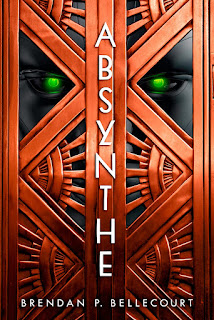
#Review / Excerpt - Absynthe by Brendan Bellecourt #SyFy

Series: Standalone
Format: Paperback, 416 pages
Release Date: December 7, 2021
Publisher: Daw Books
Source: Publisher
Genre: Alternative History / Science Fiction

In his sci-fi debut, Bellecourt explores an alternate roaring 20s where a shell-shocked soldier must uncover latent telepathic abilities to save himself and the people around him.

Liam Mulcahey, a reclusive, shell-shocked veteran, remembers little of the Great War. Ten years later, when he is caught in a brutal attack on a Chicago speakeasy, Liam is saved by Grace, an alluring heiress who’s able to cast illusions. Though the attack appears to have been committed by the hated Uprising, Grace believes it was orchestrated by Leland De Pere—Liam’s former commander and the current President of the United States.

Meeting Grace unearths long-buried memories. Liam’s former squad, the Devil’s Henchmen, was given a serum to allow telepathic communication, transforming them into a unified killing machine. With Grace’s help, Liam begins to regain his abilities, but when De Pere learns of it, he orders his militia to eliminate Liam at any cost.

But Liam’s abilities are expanding quickly. When Liam turns the tables and digs deeper into De Pere’s plans, he discovers a terrible secret. The same experiment that granted Liam’s abilities was bent toward darker purposes. Liam must navigate both his enemies and supposed allies to stop the President’s nefarious plans before they’re unleashed on the world. And Grace is hiding secrets of her own, secrets that could prove every bit as dangerous as the President’s.


In his sci-fi debut, Absynthe, Brendan Bellecourt (a.k.a. Bradley Beaulieu) explores an alternate roaring 20s where a shell-shocked soldier named Liam Mulcahey must uncover latent telepathic abilities to save himself and the people around him. This is a story that blends the lines between the best of historical fiction, science fiction, and fantasy to tell the tale of a shell-shocked soldier with unnatural abilities. 10 years ago, Liam Mulcahey was part of a group known as the Devil's Henchmen. 
 
Each of the soldiers was injected with an experimental drug that enhanced their abilities in a war against the St. Lawrence Pat which included Germany, France, Canada, and England. Most of the war was fought on US soil. Unfortunately for Liam, his memories were suppressed, and those in charge claimed it was because of a head wound. Now years later, he works as a mechanic for the wealthy family of his closest friend Morgan. When he joins Morgan and his socialite friends at a Chicago speakeasy he meets the beguiling, mysterious Grace, and partakes of the hallucination-inducing spirit absynthe.
 
Meeting Grace unearths long-buried memories which includes flashbacks to his time during the war. Liam’s former squad, the Devil’s Henchmen, was given a serum to allow telepathic communication, transforming them into a unified killing machine. With Grace’s help, Liam begins to regain his abilities, but when his former Commander and current President De Pere learns of it, he orders his militia to eliminate Liam at any cost. But Liam’s abilities are expanding quickly. When Liam turns the tables and digs deeper into De Pere’s plans, he discovers a terrible secret. 
 
Liam must come to terms with what all this means, even as starts regaining some of his past abilities. As things become increasingly complicated by the unrest caused by a hidden power struggle between shadowy factions in the government, Liam must figure out who to trust before those who want him silenced can get to him first. The same experiment that granted Liam’s abilities was bent toward darker purposes. Liam must navigate both his enemies and supposed allies to stop the President’s nefarious plans before they’re unleashed on the world. And Grace is hiding secrets of her own, secrets that could prove every bit as dangerous as the President’s.
 
Overall, Absynthe is a fast-paced, high-energy romp through speakeasies and the jazz-infused culture of the 20s with unnerving parallels to modern times. Liam is a character who puts his friends first above all else. And, even though this book is allegedly a standalone, there is possibilities that a sequel could be written in the near future.


One

On a crisp spring day in 1928, Liam Mulcahey found himself sitting in the back of a sleek maroon Phaeton, headed for the grand opening of the new flashtrain line.

As the Phaeton navigated the roads of the Chicago suburb, the driver glanced into the rearview mirror with his glowing blue eyes. “Are you quite certain it will be all right for me to attend, Master Aysana?” His voice was slightly garbled, the speaker built into his faceplate in need of repair. In the driver’s seat was a mechanika named Alastair, the chauffeur of the Aysana family, whom Liam worked for.

Sitting beside Liam in the back seat was Morgan, son of the famous rail baron Rajan Aysana. “I’m certain,” Morgan said with a placating smile. Alastair had been giddy with excitement for days at the prospect of seeing the new flashtrain debut.

“Because I can stay in the car if it would be too much of a bother,” Alastair went on.

“No, no, Alastair, you’re most welcome.” Morgan was twenty-eight, the same age as Liam. He had a round, freckled face and straight black hair with long bangs he was often flicking out of his eyes, a source of frustration for his doting mother.

“Well, then, that’s fine, sir.” Alastair couldn’t smile as such, but Liam had been working on him long enough to note the signs of his contentment. He sat straighter in his seat. His head momentarily jiggled from side to side. “That’s fine as raspberry wine.”

Liam didn’t like crowds-a predisposition that had only deepened since war’s end in 1918-yet he had to admit, he was excited too. Rajan Aysana’s accomplishments deserved recognition, but more than that, Liam wanted to pay back the kindness and generosity that Rajan and his wife, Sunny, had shown him over the years. So while the grand opening promised to be cheek-to-jowl, Liam had vowed to stifle his discomfort and raise his voice in celebration.

Besides, Leland De Pere, the President himself, was set to give a speech. He had been an Army officer during the war against the countries of the St. Lawrence Pact: Germany, France, Great Britain, and Canada. Liam had served under him, though all he recalled of the man was a speech he’d delivered to Liam’s class of soldiers, fresh out of boot camp, at Fort Sheridan. Liam doubted very much the president would remember him, but what an honor it would be if he did.

Soon they were pulling off the main road and entering the jammed parking lot of the gleaming flashtrain station. Attendants waved them toward the front of the lot, where a line of long-nosed limousines were letting out the VIPs.

The station itself was a small but impressive structure of rough stone, frosted glass, and highly polished steel. Red, white, and blue bunting was everywhere. A crowd of men, women, and children waited near the entrance, cordoned by red velvet ropes into a long, snaking line. Hundreds more had already been let in. Liam could see them standing along the edge of the platform two stories above. He swallowed hard while staring up at them; it was going to be much tighter than he’d envisioned.

As the Phaeton reached the back of the queue, Liam realized Morgan had been staring at him.

“You can stay in the car if you want, old buddy,” Morgan said.

“No, I’ll be fine.” Liam had meant the words to sound more convincing, but he could tell by Morgan’s sympathetic reaction he’d failed miserably.

“Or Alastair could take you home if you’re not feeling up to it,” Morgan said. “I’ll tell you all about it tomorrow.”

Liam shook his head. “I wouldn’t dream of robbing Alastair of the chance to see the President speak.”

Alastair glanced at Liam in the mirror. “Oh, don’t worry about me, sir.”

“No,” Liam said firmly. “We’re here. Let’s celebrate.”

Morgan paused, weighing Liam’s sincerity, then smiled. “We won’t stay long.” He squeezed Liam’s shoulder. “I promise.”

The Phaeton pulled to a stop, and waiting attendants opened the passenger door. After stepping out and being patted down for weapons by two serious-looking government officers in black uniforms, Liam and Morgan headed up the nearby ramp. When they reached the elevated platform, practically every square inch was packed. And not just the near platform; the westbound platform was half-full as well.

Feeling his breath growing shorter, Liam used one of the few tricks that helped to calm his nerves: he studied his surroundings. High above, an arched roof of steel girders and frosted glass shaded all from the bright, noontime sun. Many of those in attendance had dressed up. They wore fine suits and bowlers, frocks and cloche hats, but there were others with simple coats and dresses, not to mention a few button-down shirts that showed a wrinkle or two. Liam didn’t feel at home, precisely, in his simple woolen pants, pea coat, and tweed flat cap, but neither did he feel out of place.

Set near the tracks was a decorated wooden stage with stairs and a raised speaking platform. Cordoning the area around it were more stanchions and velvet ropes. Standing behind the ropes were men wearing black suits with the initials of the Central Intelligence Corps embroidered onto their breast pockets. More were situated at the edges of the crowd. To a man, they stood at military ease, their legs spread shoulder-width, their hands clasped behind their backs as they scanned the crowd for signs of danger.

As the seconds passed, Liam’s heart slowed, and he breathed a short sigh of relief.

“One minute!” roared a burly cuss of a man, a porter with a push-broom mustache. “One minute remaining!”

Like the other porters, the man wore a long black coat, white gloves, and a red cap, though in his case the cap was pulled so low one could hardly see his eyes. The way he barked-indeed, the very timbre of his voice-summoned memories of the war, of drill sergeants. Curiously, his loping gait was accompanied by a faint, mechanikal whirring, likely from one or both of his legs having been replaced with prosthetics.

Liam was frustrated by his inability to remember more of the war, but he’d long grown used to it. The head wound he’d suffered during one of the war’s final battles had erased most of his memories of his time in uniform. What was odd, though, and made it all the more frustrating, was the fact that the erasure wasn’t absolute. Every now and again, something would spur a memory, but the moment he tried to reach for it, it would fly away like a startled goldfinch. Such was the case on the train platform as Liam tried to recall who the porter’s voice reminded him of.

He gave it up as useless just as Alastair, having parked the Phaeton, joined them. Liam, Morgan, and Alastair were all of a height, just shy of six feet, but Alastair was necessarily thinner, the minimum amount of weight being critical for extending the life of the power source inside his gut. “Have I missed it, sirs?”

“You’re just in time,” replied Morgan.

“Very good, sir.” Alastair might be a mechanika made of steel and brass, but at the moment he looked like an overexcited child-restless feet, eyes constantly moving, his metal fingers tenting before him. “Look!” he called in his garbled voice, pointing. “There it is!”

Heads turned. Necks craned. The porter stormed along the platform’s edge shouting, “Behind the yellow line, now! Behind the yellow line!”

Standing on tiptoes, Liam saw a glint of silver to his right. Beyond it, visible over the treetops, were the towers of downtown Chicago. The silver shape grew, the sleek engine and its trailing cars becoming more discernible.

“Hold your hats!” shouted the burly porter as the hum of the train’s engines grew louder.

Liam pinched the brim of his cap just in time. The platform vibrated. The flashtrain blurred past. Liam felt himself tugged forward in the vacuum of its wake. Then a gust of wind washed over the crowd like a wave off the sea. Dresses lifted, exposing knickers. More than a few hats flew into the air, sucked into the flashtrain’s mighty draft. Many laughed in excitement. Others stared in awe as the train dwindled into the distance. A few rows ahead of Liam, a red-haired girl sobbed in the arms of her mother.

As the train’s thunder faded, the crowd hummed excitedly. Many of those in attendance would never have ridden on a train. Now they’d seen a wonder of the modern world, a train so fast its speed rivaled the bi-planes from the war.

“So that’s it, then?” Liam shared a wink with Morgan. “Time to go home?”

Morgan let out an affected sigh. “Yes, yes, I suppose it is.”

Alastair looked from Morgan to Liam and back, somehow managing to look heartbroken. “But the President…”

Morgan smiled sympathetically. “Sorry, Alastair. It was only a joke. Father wanted to demonstrate the train’s top speed. It’ll be returning shortly.”

“I see.” Alastair’s eyes went dark several times, his equivalent of a blink. “Did you think your joke was funny, sir?”

A laugh burst from Morgan. “No, I suppose I didn’t.”

The hum of conversation had only just started to die down when the crowd shifted their attention to the westbound track. Moments later, the train glided to a stop ahead of them. Behind the sleek engine were three passenger cars, each bearing Aysana Lines’ bright yellow logo, a circle with the letters AL inside it. Curiously, the third car had no doors at all-apparently, it could only be reached from an adjoining car-and its windows were blacked out, blocking any view of the interior.

To Liam’s right, the burly porter dragged a truly massive sandwich board toward the edge of the track. It read, Forest Park Welcomes President De Pere! After setting it down near the last car, the porter turned to face the crowd. “Ladies and gentlemen,” he roared, “I give you the President of the United States.”

To a round of applause, the first car’s doors slid open. Revealed was a strikingly handsome man in his late forties with hazel eyes and golden blond hair parted to one side. Standing behind him were Morgan’s parents, Rajan and Sunny Aysana, a handsome Vietnamese couple who’d met in Chicago after emigrating to the States some forty years ago. They departed the train car together. As Rajan and Sunny smiled proudly, De Pere shook a few hands, waved, and sent smiles over the crowd, then he took the stairs to the top of the waiting stage.

Liam recalled a much younger Leland De Pere, the striking officer who’d given the speech in Fort Sheridan along the shores of Lake Michigan. It had been a hopeful day, but for some reason, seeing De Pere working the crowd gave rise to another of the few memories Liam had of the war, one of a broken battlefield, of holding a Springfield rifle, of trenches crisscrossing the shattered terrain. It had been dusk, the air both chill and damp. Ahead, a thick bank of fog had approached Liam’s position, and somewhere inside it, rhythmic booms pounded the earth. Red lights swept the fog’s thickness, ruby scythes cutting wheat.

Liam could never remember how he’d wound up in that terrifying place. He’d trained and served in the 128th Infantry, a grease monkey outfitting and repairing the battle suits used by the U.S. Army. How he’d landed on a battlefield, holding a bayonet-tipped rifle, he wasn’t sure. His best guess was that desperation had driven the Army to reassign him. It had been a critical battle, after all, the last major offensive of the war. He must have been reassigned to help in it.

Liam was suddenly drawn back to the flashtrain platform when Morgan elbowed him and said in a low voice, “What do you think happened to him?”

“Who?” Liam asked.

Morgan pointed to the shadows of the passenger compartment the President had just left. “The President’s aide, Max Kohler.”

Watching from within shadows was an impeccably dressed man whose face was hidden by an iron mask. Much of the mask was the dull color of pewter, but its filigreed swirls shone like oxidized brass. It was all soft curves, with no human features to speak of save three slits, where the mouth and nose would be, and two eyeholes-one a circular red lens, the other oval-shaped, revealing a bright blue eye. As the President spoke, Kohler studied the crowd warily.

Liam stared at him a moment. “I’ve no idea.”

It was likely Kohler had sustained some terrible injury during the war. His demeanor was off-putting, as if he distrusted everyone and everything around him. Leaning as he was against the luggage rack, his jacket hung open to reveal a sidearm, a Webley revolver, in a black leather holster. Like the burly porter’s barked commands, there was something familiar about the cocky way he was surveying the crowd.

For a moment, Kohler’s lone blue eye met Liam’s browns. He stared at Liam hard, as if he too were having a moment of recognition. Or maybe it was Liam’s imagination. In all likelihood he was only sizing Liam up for threats to the President. Soon, his gaze passed over to others in the crowd.

What followed was the sort of speech a public official gives at a ribbon cutting. That De Pere was a one-time military officer and a West Point graduate was clear. You could see it in his posture, in the precise way he spoke. He praised Rajan Aysana’s accomplishments as an inventor, an innovator, and an industry leader, but he gave compliments to his wife Sunny as well, who was bright, funny, and an ever-present fixture at all of Rajan’s public appearances.

“So it is,” De Pere said while waving to the red ribbon behind him, “that I bestow the honor of opening Chicago’s newest commuter line to the woman who supported her husband each and every step he took to becoming a giant of American industry.”

Sunny and Rajan climbed the stairs up to the platform where Sunny, her eyes crinkling with pride, picked up a massive pair of scissors from a pedestal. The scissors looked comically large in her small hands, but Sunny didn’t seem to mind. It took her a few tries, and her efforts were accompanied by a smattering of good-natured laughs, but eventually she managed to cut through the ribbon. Then she, De Pere, and Rajan were walking onto the roof of the train car, linking hands and raising them in triumph.

The crowd along both platforms cheered.

Eventually it was quiet again, and Rajan and Sunny took the stairs down. De Pere remained and walked to the edge of the stage, where he spread his arms wide and cast his gaze over the crowd.